The
Watch
How we responded to a false claim about Stefan Löfven’s watch.
When a false claim about Stefan Löfven’s watch began spreading online, we decided to put the watch up for auction.
I was working as a political adviser at the Prime Minister’s Office. A right-wing nationalist page had posted a photograph of Löfven with his watch circled in red. Beside it was a product shot of a Patek Philippe Calatrava priced at SEK 275,000, around thirty thousand dollars. The suggestion was clear: a man who claimed to represent working people was wearing a watch most of them could never afford.
It was a different watch. Löfven had received it in the 1990s, when he was a welder and a trade unionist, as a gift from members of the International Association of Machinists and Aerospace Workers in North America. An updated version was still available in the union’s webshop for about 70 dollars.
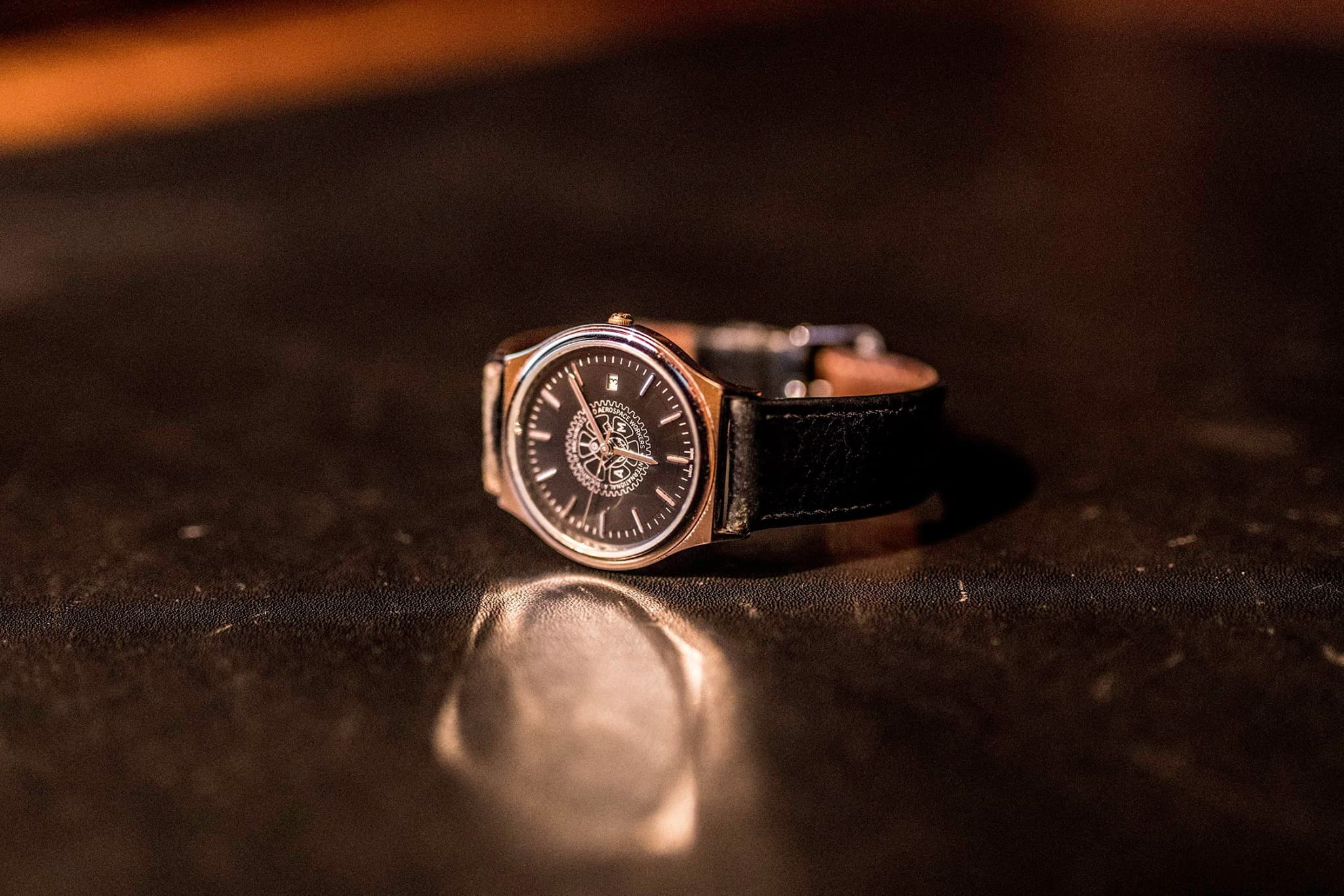
The facts were easy to check. Getting people to see them was harder. Within days, the post was being shared well beyond the page that had published it. Some of Löfven’s own followers believed it and were angry. For them, the photograph seemed to confirm a suspicion that politicians lived differently from the people they represented.
We could have issued a statement with a link to the union’s catalogue. Reporters might have picked it up. But there was no reason to assume that a correction would reach the people who had seen the original post, or that they would believe it coming from us.
The rumour was spreading because people wanted to share it. It gave them something to be angry about, a joke to pass on, or a way to make a political point. A formal denial offered very little of that. It also risked another round of headlines about the accusation: Prime Minister denies owning luxury watch.
Instead, Löfven posted from his own Facebook account. If the watch was worth SEK 275,000, he suggested, it should be sold for a good cause. He offered it to Musikhjälpen. Musikhjälpen (Music Aid) is an annual Swedish radio and television fundraiser that brings together music, public donations, and charity auctions to support a humanitarian cause. That year, it was raising money for children’s right to education.
“Support Musikhjälpen, buy my old and faithful watch, allegedly ‘worth’ SEK 275,000!”
He told the story of a colleague mentioning the supposed Patek Philippe, and their amusement when they looked at the photograph. He explained where the watch came from and what a similar one actually cost, about 70 dollars. The tone was light. He seemed to be enjoying the chance to tell people about it.
“So I want to give them the chance of a lifetime! If they are lucky they may get it for SEK 200,000 or less.”
He finished by saying that the values we live by matter more than what we wear. Then he asked everyone, whether they bid or not, to put less trust in online rumours and more in the machinists’ sense of quality.
The auction made the response funny without needing much explanation. Anyone still claiming the watch was worth a fortune was welcome to bid for it. The post corrected the claim, but it also gave people a reason to share the correction. They could enjoy the joke, support the charity, or pass along the story of a gift from fellow trade unionists. They did not have to be Löfven supporters to find something in it.
We also published it where the rumour was already spreading. People could share Löfven’s own words directly, rather than wait for a news report about our response.
Response to the post
The watch sold for SEK 65,000, and Löfven paid the sum to Musikhjälpen. Major Swedish news outlets covered the auction. The coverage gave us another opportunity to explain where the watch came from and remind people to check what they read online.
I have returned to this episode often in recent years. It is a useful example of why correcting a false claim takes more than finding the evidence. You also have to consider who has seen the claim, why they believed it, and what might persuade them to look again.
A press statement can be the right response. In this case, though, the personal story and the auction gave people more to work with. The correction was easy to understand and worth passing on. That helped it reach people a formal denial might have missed.
This is relevant to the systems I build today. I work on tools that help organisations follow public debate and respond to it. Tasks that once took a small team days can increasingly be done faster and across many issues at once. That can help organisations with limited staff, but it also makes it easier to produce persuasive material without taking enough care over whether it is true.
There is nothing about humour, a personal story, or a well-placed post that guarantees honesty. All of them can help a false claim spread too. In the watch case, we had evidence to support what we were saying. The response worked because we found a way to make people interested in that evidence. The responsibility to check it still sat with us.
I also think the way Löfven ended the post mattered. He did not ask people who had shared the rumour to admit they had been fooled. He invited them to support a charity and be a little more careful with rumours next time. It gave them a way to reconsider without being singled out or mocked.
We cannot know how many people changed their minds. But the response brought the actual story of the watch to a much wider audience and raised money for a good cause. It is still an approach I draw on: explain what happened, give people a reason to listen, and leave them room to reconsider.
